Menorcan gastronomy is a direct reflection of the island: simple, rooted in local produce and deeply influenced by the countryside and the sea. Its traditional recipes have been passed down from generation to generation and always prioritize the flavor of the ingredient over complex preparations.
Getting to know Menorca also means sitting down at the table. In this guide we review the typical dishes and products of Menorca you shouldn’t miss, whether you’re visiting the island for the first time or looking for an authentic culinary experience.
1) Lobster stew: Menorca’s great traditional dish
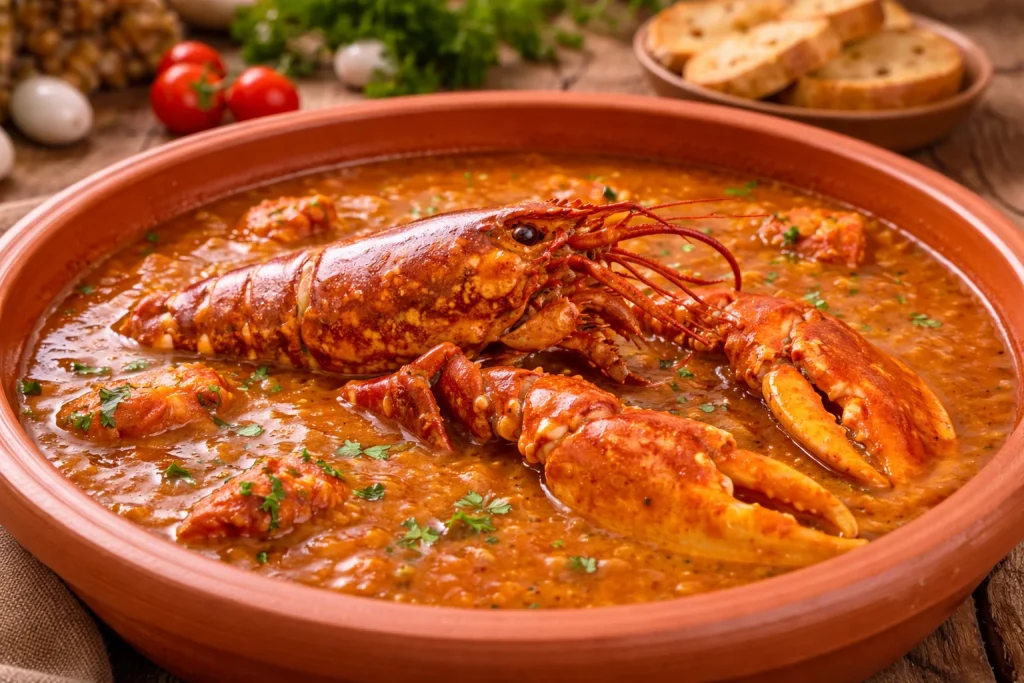
Lobster stew is one of the most representative dishes of Menorcan gastronomy and a true hallmark of the island. It’s a fisherman’s stew that showcases the freshest seafood and a slow, careful preparation where each ingredient has its moment.
For years, this dish has been linked to important celebrations and special meals, becoming a gastronomic experience rather than just a recipe. Tasting lobster stew is a direct way to understand Menorca’s culinary tradition.
A recipe tied to the sea and tradition
This stew was born in fishing communities, where lobster was a common product for fishermen. Over time, this simple yet flavorful dish became one of the most appreciated in Menorcan cuisine.
Its main feature is the light, aromatic broth, made from a basic sofrito and a delicate stock. It’s always served piping hot and enjoyed with bread to soak up every last drop.
Key ingredients
The traditional recipe relies on just a few high-quality ingredients:
- Fresh lobster, whole and chopped
- Onion
- Garlic
- Ripe tomato
- Red bell pepper
- Extra virgin olive oil
- Dry white wine
- Bay leaf
- Salt and pepper
- Fresh parsley
The balance between them is key so the lobster’s flavor stands out without being masked.
Step-by-step preparation
- Preparing the lobster
The lobster is cleaned and cut into medium pieces, keeping the shell to preserve all its flavor during cooking. - Base sofrito
In a wide pot, slowly sauté chopped onion, garlic and red pepper until soft and well-poached. - Tomato and initial cooking
Add crushed tomato and let it reduce until you get a concentrated, aromatic base. - Adding the lobster
Add the lobster pieces to the sofrito and briefly stir-fry so they absorb the flavors. - Wine and final simmer
Add the white wine, bay leaf, and the right amount of salt and pepper. Simmer gently for a few minutes, avoiding overcooking so the meat stays tender. - Serving
Serve very hot, topped with fresh parsley, with toasted bread as the traditional accompaniment.
When and where to enjoy it
- Perfect for special meals or celebrations
- Very common in traditional coastal restaurants
- It’s best to book in advance, especially in high season
More than a dish: an experience
Lobster stew isn’t just a typical Menorcan recipe—it’s a way of sitting down and enjoying the moment, unhurried. Its preparation, presentation and flavor make it one of the great icons of Menorcan cuisine.
Tasting it is one of the best ways to connect with the island’s history, the sea and its gastronomic culture.
2) Arroz de la tierra: Menorca’s heartiest oven-baked dish
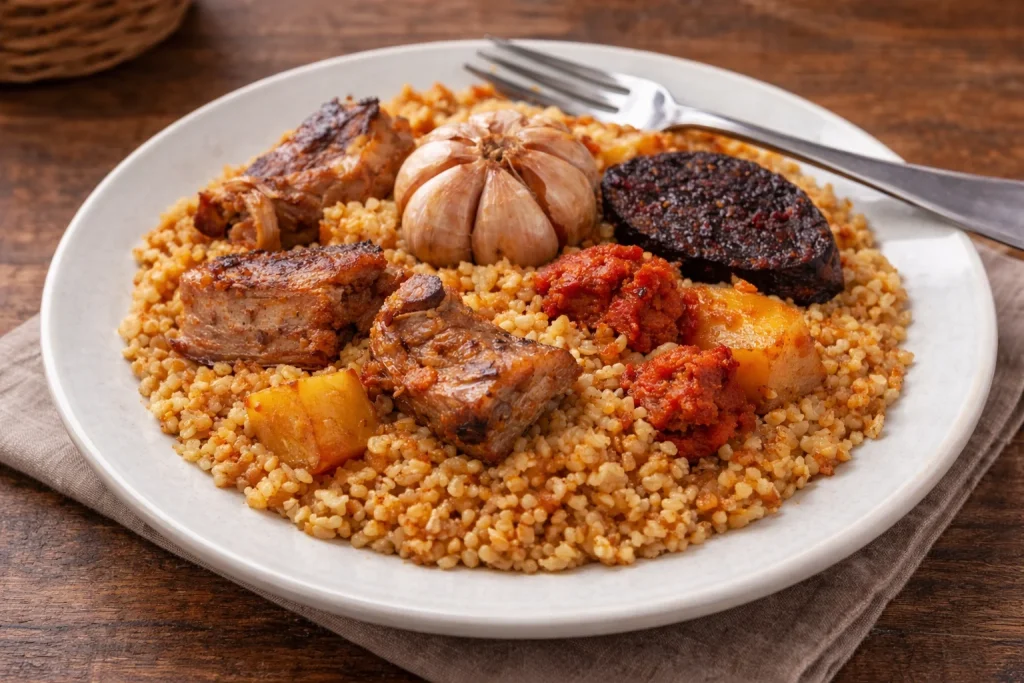
Arroz de la tierra is one of the oldest and most traditional dishes in Menorcan cuisine. Despite its name, it doesn’t contain rice, but rather cracked wheat, which for centuries was a staple ingredient in the island’s rural cooking.
It’s an oven-baked dish—hearty, flavorful and closely linked to family celebrations, local festivities and winter meals. The method is simple, but the result is an intense, deeply comforting dish.
Key ingredients
The traditional recipe relies on humble, local products:
- Cracked wheat (or bulgur)
- Pork ribs
- Black sausage or blood sausage
- Sobrasada
- Potato
- Sweet potato
- Head of garlic
The combination of meats and cured sausages adds depth of flavor to the wheat, which acts as the base of the dish.
Traditional preparation
- Soaking the wheat
The cracked wheat is soaked for several hours until it expands significantly and becomes well hydrated. - Preparing the baking dish
Drain the wheat and place it in an oven-safe clay dish, forming an even layer. - Arranging the ingredients
Spread the ribs, black sausage, potato and sweet potato on top. Place the garlic head, cut in half, in the center, along with small pieces of sobrasada. - Oven cooking
Bake in a preheated oven at 180 °C for about 45 minutes without stirring, allowing the flavors to blend slowly. - Serving
Traditionally, the meat is served first, followed by the wheat mixed with the remaining ingredients and roasting juices.
A dish with rural roots
Arroz de la tierra is a clear example of Menorca’s make-the-most-of-it cuisine, where simple ingredients were used to their fullest. Today it remains one of the island’s most representative dishes and a true expression of its gastronomic identity.
Tasting it means discovering the most authentic Menorca: slow-cooked food, enjoyed without rushing.
3) Oliaigua: Menorca’s simplest and most authentic soup
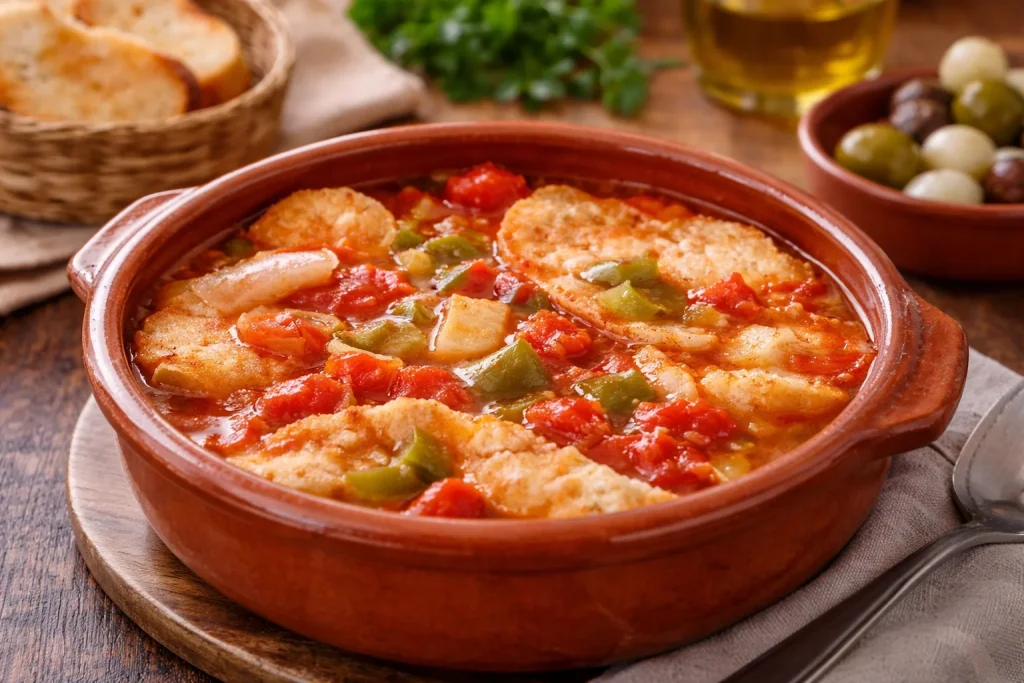
Oliaigua is one of the most representative dishes of traditional Menorcan cuisine. It was born in times of scarcity, when food was based on basic, accessible ingredients, and for many years it was a common countryside breakfast.
It’s a humble recipe, made mainly with water, olive oil and vegetables, that has evolved over time without losing its essence. Today it remains a symbol of Menorca’s popular cooking, present both in homes and in restaurants.
A dish tied to rural life
Also known as oliaigo in Menorcan, oliaigua was an inexpensive, nourishing meal that farmers ate to start the day. Its simplicity made it easy to adapt to whatever the garden offered throughout the year.
Although it was originally made with very few ingredients, the recipe gradually incorporated seasonal vegetables to enhance both flavor and nutritional value.
How oliaigua is eaten
Oliaigua is traditionally served at room temperature, never too hot. It’s a light but very tasty soup, always accompanied by toasted bread or rustic country bread, placed in the bowl and softened with the broth.
In many cases—especially in summer—it’s also served with fresh figs, eaten between spoonfuls, creating a distinctive sweet contrast.
Traditional preparation
The base is as simple as the name suggests: water and oil. From there, vegetables such as tomato, onion, garlic or green pepper are added and simmered gently to extract flavor without complex techniques.
Each family and each restaurant has its own version, adjusting ingredients based on season and product availability.
Oliaigua with figs
The best-known and most appreciated version is oliaigua with figs, especially popular in summer when figs are at their peak. This pairing perfectly sums up Menorcan cooking: simple, seasonal, and deeply connected to the land.
A dish that defines Menorcan gastronomy
Oliaigua doesn’t aim to impress with complexity, but with authenticity. It’s a recipe that tells Menorca’s story—its relationship with the countryside and its way of understanding food: respect for the ingredient, resourcefulness and honest flavor.
Trying a well-made oliaigua is understanding the island beyond its beaches.
4) Perol menorquín: the traditional pork stew
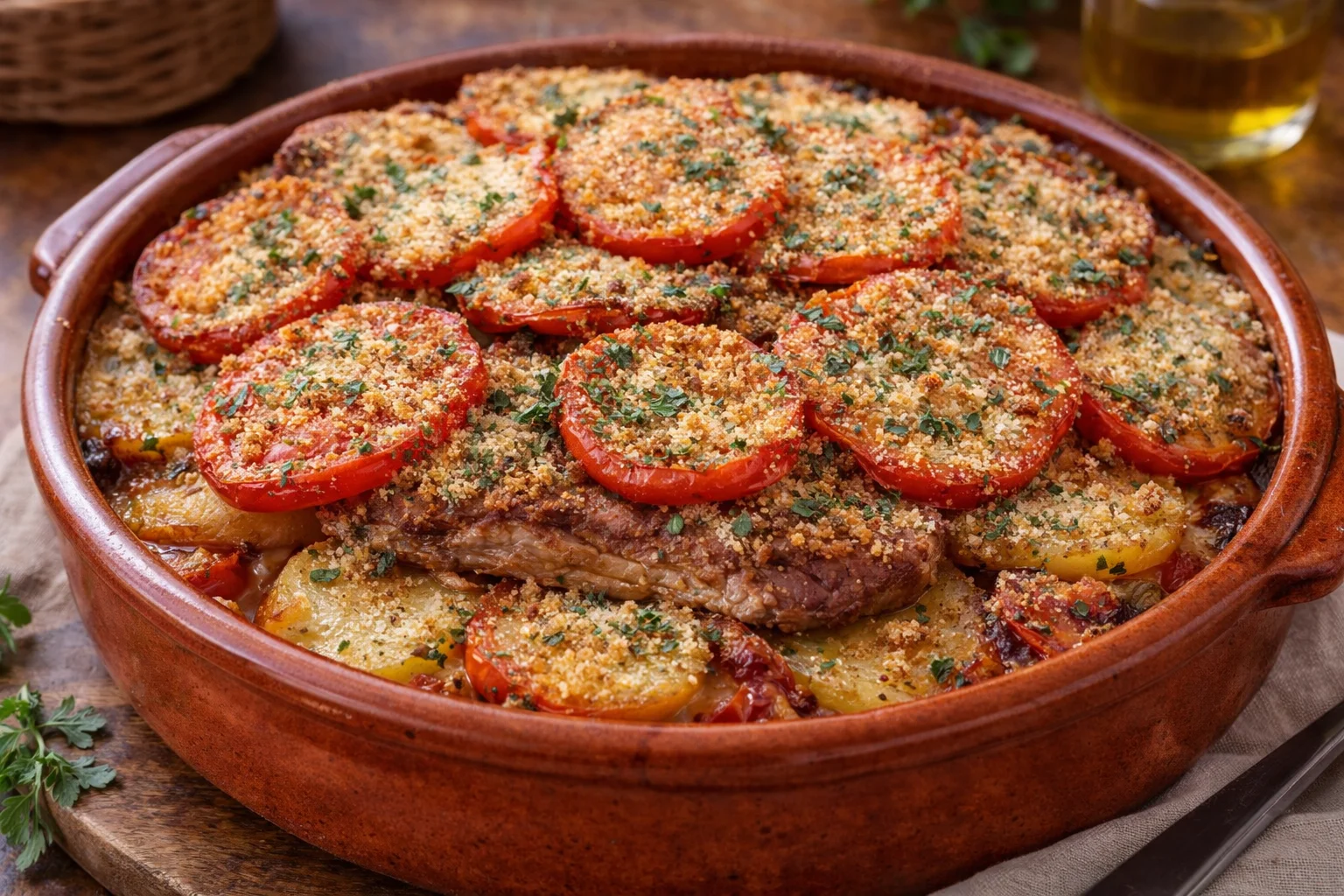
Perol is one of the most traditional stews in Menorcan cuisine. Unlike similar recipes elsewhere in the Balearic Islands, in Menorca this dish is made mainly with pork, an animal historically central to the island’s diet.
It’s a homemade, hearty and comforting stew, deeply linked to family cooking and winter meals.
A dish of popular origin
Perol began as a resourceful, slow-cooked recipe prepared in clay pots or deep casseroles. The goal was to create a complete, nourishing dish from simple, affordable ingredients.
For generations, it has been a common preparation in Menorcan homes, especially in cold seasons or after long days working in the countryside.
The star ingredient: pork
Pork is the base of Menorcan perol. Different cuts are used depending on the household and family tradition, combined with potatoes and a simple sofrito.
The result is an intense-flavored stew with a rich, well-bound sauce, where the potatoes absorb the meat juices during cooking.
Traditional preparation
Perol is made slowly, without rushing:
- Sauté basic ingredients such as onion and garlic
- Add chopped pork
- Add potatoes, cut into irregular pieces
- Simmer gently until the meat is very tender
It’s not a spiced or complex dish—the flavor comes from the quality of the ingredients and the cooking time.
When it’s eaten
- A typical autumn and winter dish
- Very present at family meals
- Increasingly revived in traditional cuisine restaurants
It’s a clear example of authentic Menorcan cooking, away from trends and rooted in tradition.
A stew that speaks of Menorca
Perol doesn’t aim for sophistication, but for warmth and flavor. It represents the most rural, everyday Menorca—the one that’s simmered slowly and shared around the table.
Tasting it is discovering a lesser-known, yet very real, side of Menorcan gastronomy.
5) Mahón-Menorca cheese (PDO): the island’s great gastronomic symbol
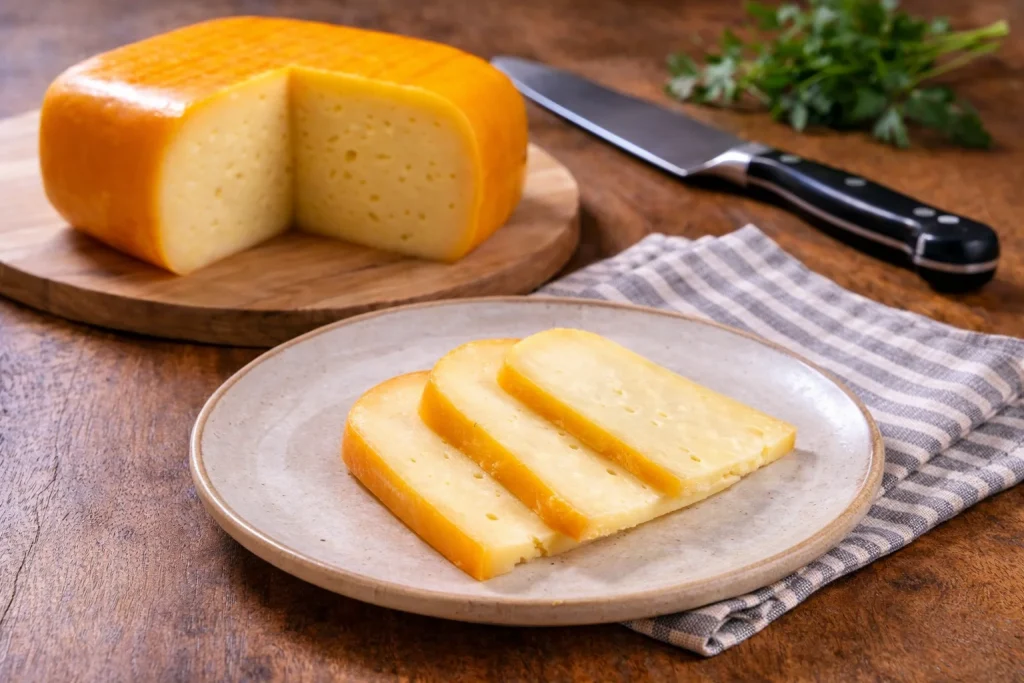
Mahón-Menorca cheese is, without a doubt, the most representative product of Menorcan gastronomy. It holds Protected Designation of Origin (PDO), which guarantees its origin, its traditional production method and the quality of the final product.
This cheese is a direct result of Menorca’s landscape, climate and a cheesemaking tradition that has remained alive for centuries—especially linked to rural life and local livestock farming.
A cheese with its own identity
Mahón-Menorca cheese is made exclusively with cow’s milk, mainly from breeds adapted to the island. Its square shape with rounded edges and its characteristic orange rind make it easy to recognize.
During aging, the cheese is traditionally rubbed with olive oil—and in some cases paprika—which contributes to its aroma and its distinctive color.
Types of Mahón-Menorca cheese by aging
Depending on aging time, Mahón-Menorca comes in different styles, each with its own personality:
- Young
Very soft and creamy texture, with a delicate, slightly milky flavor. Ideal for those who prefer fresh, mild cheeses. - Medium-aged
Balanced and aromatic, with a firm yet still elastic texture. One of the most consumed and versatile types. - Aged
Intense, persistent flavor, with slightly salty notes and a deeper aroma. Perfect for lovers of cheeses with character.
How it’s eaten
Mahón-Menorca cheese is very versatile and can be enjoyed in many ways:
- On its own or with bread
- With a drizzle of olive oil
- As part of cheese boards
- Included in traditional dishes and local recipes
It’s also common to find it grated or melted in simple preparations, where it adds flavor without losing its identity.
A product tied to Menorcan tradition
Beyond its flavor, Mahón-Menorca cheese represents a way of life. Its production is closely linked to the Menorcan countryside, to the llocs (rural farms), and to a way of working based on respect for the environment and the product.
Tasting this cheese is one of the best ways to understand Menorca’s gastronomic culture.
6) Sobrasada and Menorcan cured sausages
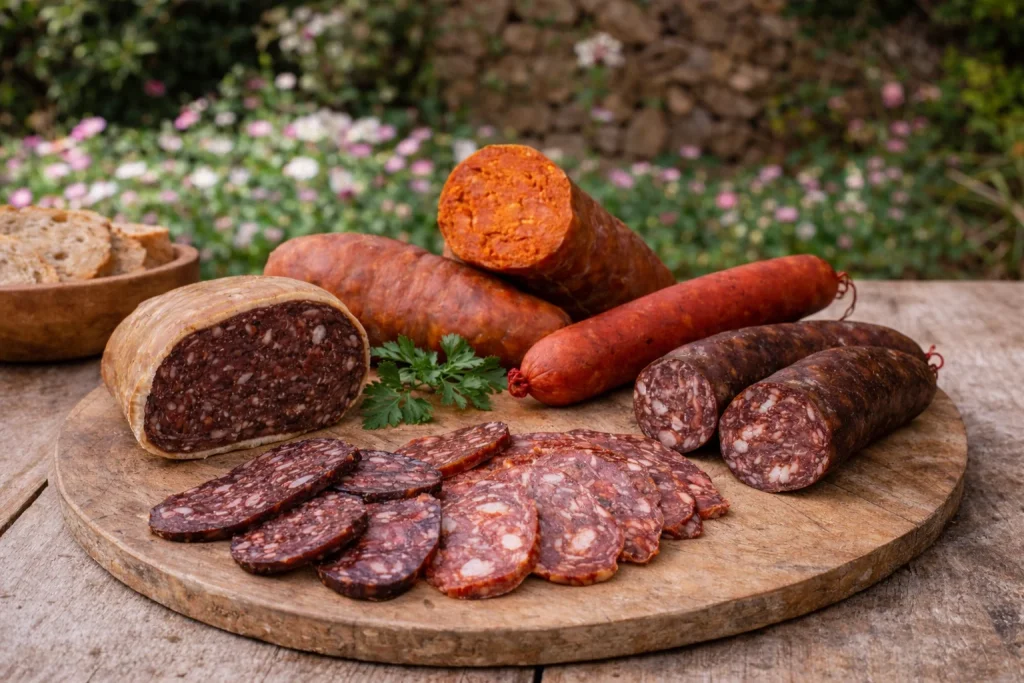
Menorcan sobrasada is one of the most recognizable products in local gastronomy. Unlike other Mediterranean sobrasadas, the Menorcan version tends to be less fatty, with a firmer texture and a balanced flavor where paprika stands out without being overly spicy.
It’s traditionally made with pork, spices and a curing process adapted to the island’s climate, giving it a distinctive and easily recognizable character.
Traditional cured sausages of Menorca
Alongside sobrasada, Menorca has a rich variety of artisan cured meats closely tied to home cooking and traditional pig slaughters:
- Carn-i-xulla: a dry sausage made with lean meat and fatback, with an intense, very characteristic flavor.
- Butifarras: found fresh or cured, and used in many local dishes and recipes.
- Longanizas: mild, aromatic and versatile, both for cooking and for eating cured.
How they’re eaten
These cured meats are part of everyday island life and are commonly enjoyed:
- At traditional breakfasts, with rustic bread
- As an afternoon snack or bite
- In tapas and simple dishes
- As ingredients in homemade recipes and stews
Trying sobrasada and Menorcan cured meats is a direct way to discover the most authentic Menorca: the countryside, family traditions and slow, unhurried cooking.
7) Peix fregit and Menorcan seafood cooking
Fish holds a central place in Menorcan gastronomy. Surrounded by the sea and with a strong maritime tradition, the island has developed a cuisine based on fresh catch of the day, with simple preparations that respect the natural flavor of the fish.
Menorca’s seafood cooking avoids fuss: it focuses on product quality, freshness and traditional techniques passed down through generations.
Peix fregit: simplicity and flavor
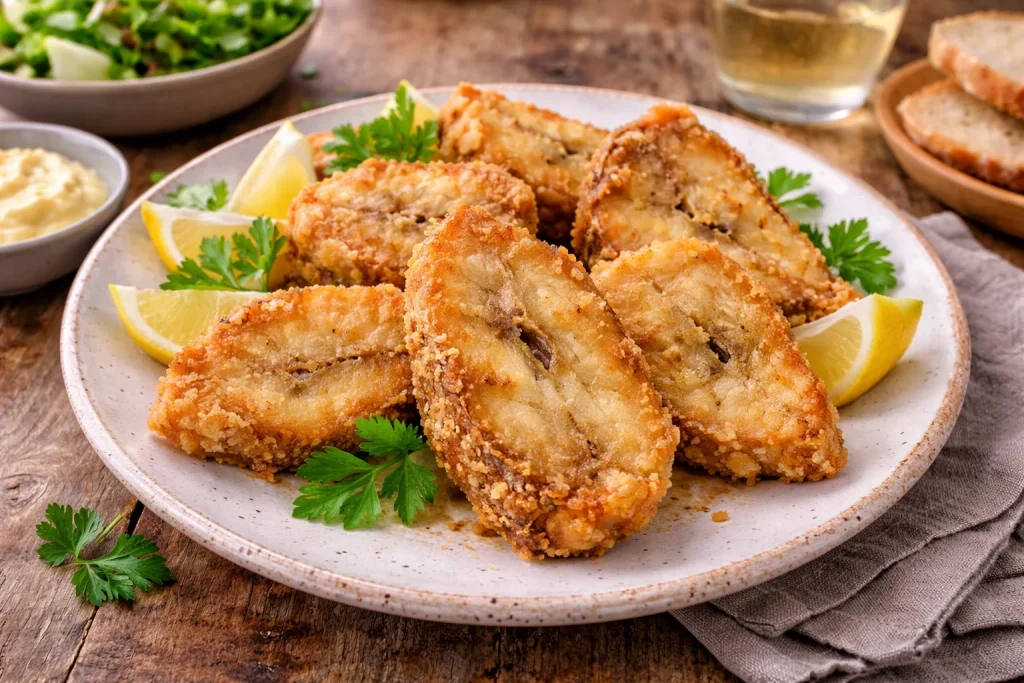
Peix fregit is one of the most common and appreciated ways to eat fish in Menorca. It’s fresh fish—usually small to medium—lightly floured and fried in oil.
- Crispy on the outside
- Juicy inside
- Clean, straightforward flavor
It’s a very common dish in bars, traditional restaurants and also in homes, especially when the day’s catch is good.
Oven-baked fish
Another frequent preparation is oven-baked fish, kept simple and served with potatoes, onion, tomato and aromatic herbs.
- Slow, even cooking
- Ideal for larger fish
- Very common at family meals
The oven helps the fish retain all its juices and aroma without masking its flavor.
Seafood stews
Seafood stews are part of Menorca’s most traditional and comforting cooking. They’re made with mixed fish—sometimes with seafood—vegetables and a delicate broth.
- Recipes of humble origin
- Using whatever fish is available
- Dishes deeply tied to local tradition
These stews change with the season and the catch, reflecting the close relationship between the island and the sea.
Cuisine based on the ingredient
In general, Menorcan seafood cooking is characterized by:
- Very few complex preparations
- Minimal use of spices
- Absolute respect for fresh fish
The goal isn’t to transform the product, but to enhance its natural flavor.
Enjoying peix fregit or a seafood stew is an authentic way to experience Menorca from the table—understanding its history, environment and its relationship with the sea.
8) Formatjades
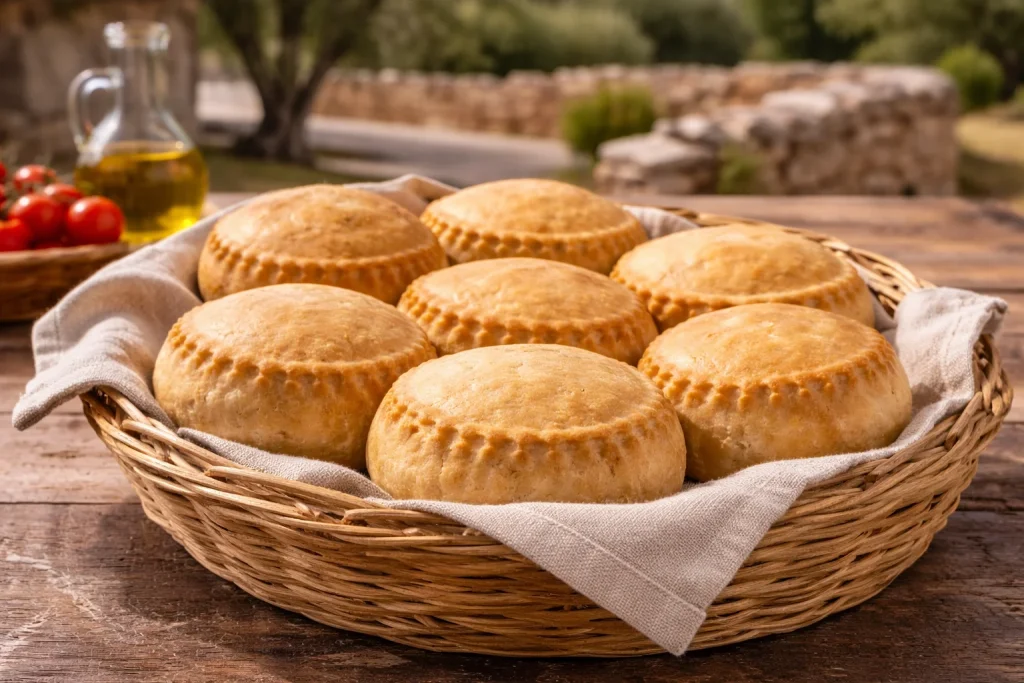
Formatjades are one of the most traditional sweets in Menorcan baking, closely linked to local festivities and the island’s festive calendar. They’re made with a soft dough—slightly crisp on the outside—traditionally filled with fresh cheese or curd.
Sweet formatjades
They’re the best known and most appreciated, especially at Easter and family celebrations.
- Filled with fresh cheese or curd
- Tender, delicate texture
- Mild flavor, not overly sweet
- Traditional aroma tied to home baking
They’re enjoyed both on special occasions and year-round in Menorca’s artisan bakeries and pastry shops.
Savory formatjades
Besides the sweet version, Menorca also has savory formatjades, less known outside the island but deeply rooted in rural tradition.
- Filled with pork
- Filled with lamb
- Heartier and more savory
- Traditional in family settings and local celebrations
These versions reflect the recipe’s rural origins and the importance of making the most of available seasonal products.
A symbol of Menorcan tradition
Formatjades—both sweet and savory—represent Menorcan cuisine in its most authentic form: simple recipes passed down through generations, where the product and tradition take center stage.
9) Pastissets and traditional Menorcan pastries
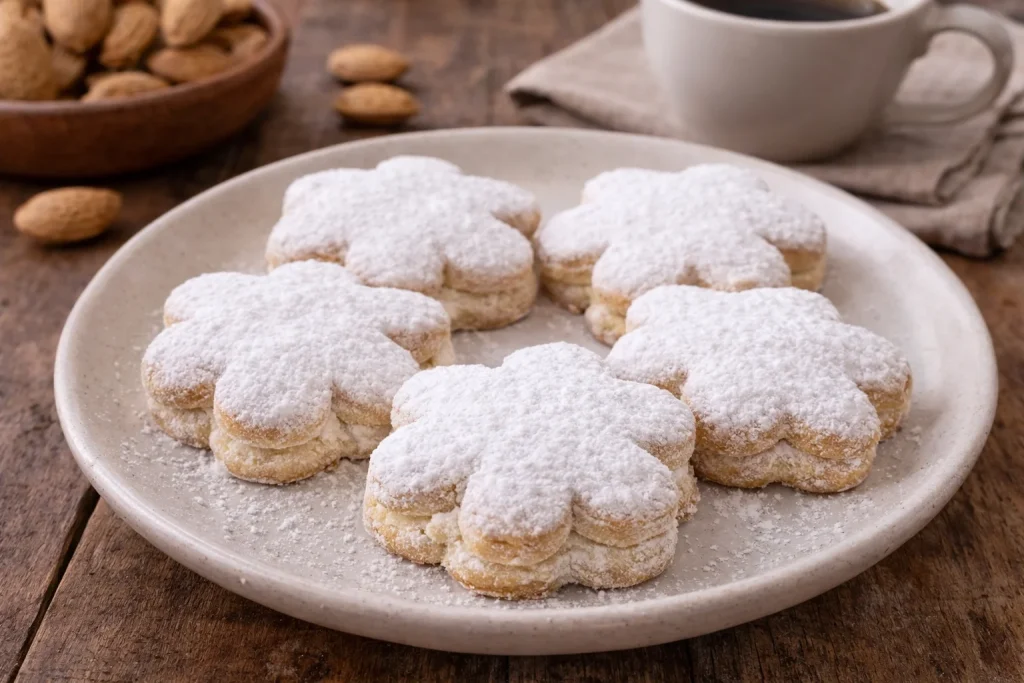
Traditional Menorcan pastries are simple, artisanal and closely linked to home baking. Sweets are made using recipes passed down through generations, with basic ingredients such as flour, sugar, eggs, lard and nuts.
It’s baking designed for everyday life, family celebrations and local festivities, always with gentle, familiar flavors.
Pastissets
Pastissets are one of the island’s best-known sweets.
- Small pieces made with a delicate dough
- Tender and slightly crisp texture
- Traditionally filled or flavored depending on the area
- Very common at festivities and celebrations
They’re enjoyed both at home and in traditional bakeries and pastry shops.
Sweet cocas
Sweet cocas are an essential part of Menorcan baking.
- Spongy or flat doughs
- Simple preparations
- May include sugar, fruit or local ingredients
- Very present at patron saint festivities
They’re a clear example of resourceful cooking adapted to the festive calendar.
Carquinyols
Carquinyols are dry, crunchy biscuits, usually made with nuts.
- Hard, crunchy texture
- Intense flavor
- Perfect for dipping in coffee or liqueur
- Long-lasting—ideal as a gastronomic souvenir
Sweets for any moment
Menorcan pastries are perfect for:
- Pairing with coffee or herbal tea
- Traditional afternoon snacks
- Gifts and gastronomic souvenirs
- Discovering local cuisine beyond savory dishes
Trying these sweets is a simple, authentic way to get closer to Menorca’s culinary tradition.
10) Menorcan gin: British heritage and Mediterranean flavor
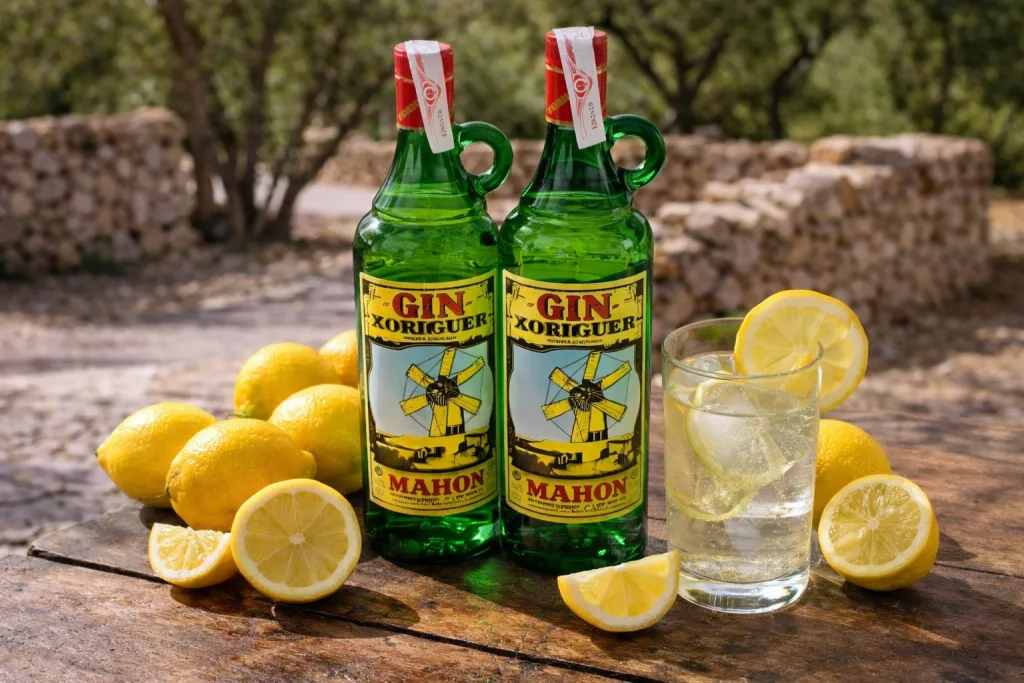
Menorcan gin is one of the island’s most distinctive and representative drinks. Its origins go back to the 18th century, during British rule in Menorca, when English soldiers introduced gin consumption and Menorcans adapted the recipe using local ingredients.
Unlike many other gins, Menorcan gin is traditionally made from wine alcohol—that is, alcohol obtained from wine—which gives it a smoother, more aromatic character. To this, juniper is added (the essential base of any gin), along with other Mediterranean herbs that vary depending on the producer.
Key characteristics of Menorcan gin
- Artisanal production in local distilleries
- Uses wine alcohol instead of grain alcohol
- Clean, intense juniper aroma
- Balanced, dry and very aromatic flavor
Traditionally, Menorcan gin is served neat or over ice, with a slice of lemon or citrus peel—one of the most classic ways to enjoy it on the island, especially during local festivities.
Today, Menorcan gin is part of the local gastronomic identity and is common both in traditional bars and at celebrations and events. Many distilleries also offer more modern expressions without losing the essence of the original recipe.
It is one of Menorca’s most representative drinks.
Tips for enjoying Menorcan gastronomy
Discovering Menorca’s cuisine goes far beyond sitting down to eat. It’s part of the trip and, in many cases, it requires planning your transport well to make the most of the experience.
- Look for traditional cuisine restaurants, especially outside the most touristy areas. Many of the best dishes are found in small, family-run places.
- Ask about off-menu dishes, as they’re often made with the freshest catch or seasonal produce of the day.
- Visit local markets to try Mahón-Menorca cheese, artisan cured meats and traditional sweets straight from local producers.
- Stop by farms and cheese dairies, a great way to learn the product’s origin and buy directly from producers.
- Don’t stick only to the best-known dishes: Menorcan cooking has many simple, less famous preparations that are well worth trying.
- Book ahead in high season, especially at traditional restaurants and during local festivities.
Getting around between towns, rural restaurants or less accessible areas can make the difference between just another meal and a truly authentic gastronomic experience.
Gastronomy and mobility: how to plan your food route
Many of Menorca’s best gastronomic experiences are found outside the main tourist hubs:
cheese dairies in the island’s interior, rural restaurants, local markets, or dinners at the port of Maó or in the historic center of Ciutadella.
Having a private transfer or comfortable transport service allows you to:
- Enjoy lunches and dinners without worrying about driving
- Move between towns and restaurants without depending on limited schedules
- Plan food routes combining visits, shopping and restaurants
- Travel in a group with total comfort
Conclusion
Menorcan gastronomy reflects the island’s history, landscape and way of life. These are honest recipes tied to local produce and tradition, allowing you to discover Menorca beyond its beaches.
Spending time exploring its cuisine, visiting local producers and enjoying a good meal in towns such as Ciutadella, Maó, Es Mercadal or Fornells is an essential part of any trip to the island.
If you want to experience Menorca’s gastronomy without rushing and with total comfort, planning your transport well is key.
A private transport service will let you focus only on enjoying the island’s flavors.