Talayotic Minorca is one of the most important archaeological heritages in the western Mediterranean and one of the island’s most distinctive identity marks. Long before the arrival of Romans or Muslims, Menorca was already inhabited by a complex society that left behind an extraordinary legacy of talayots, taulas and navetas, cyclopean constructions unique in Europe.
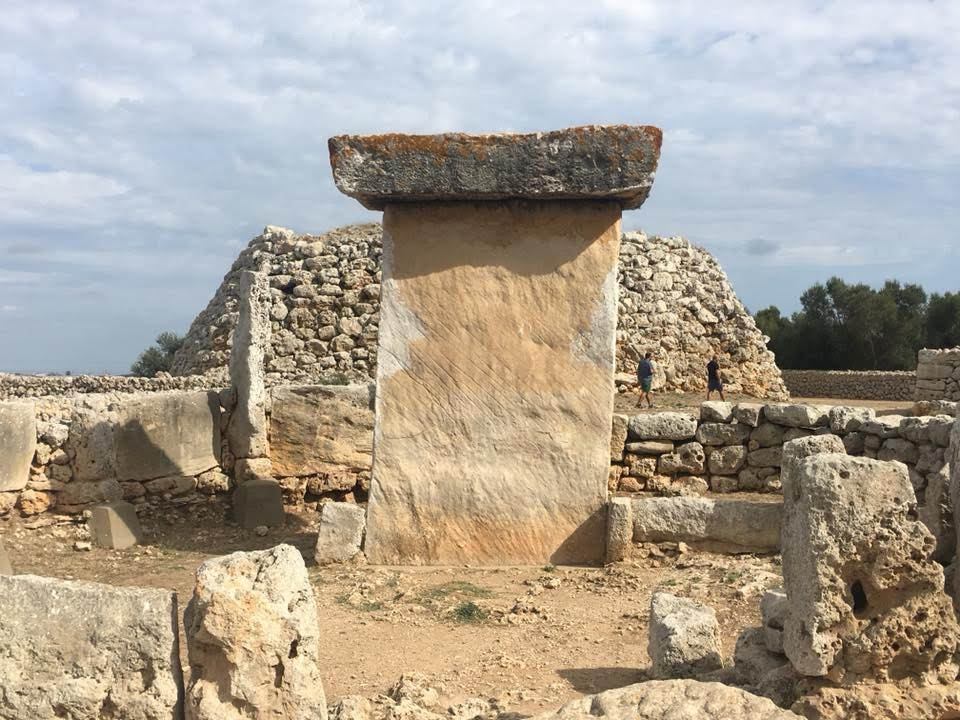
This group of archaeological sites, spread across the island, allows us to understand how the first inhabitants of Menorca lived, organized themselves and interacted with their environment. Visiting these places is a journey thousands of years back in time, revealing a different Menorca—silent, ancient and deeply connected to the land.
What is Talayotic culture?
Talayotic culture developed in Menorca approximately between 1600 BC and 123 BC, when the island was conquered by Rome. During this long period, prehistoric communities built large stone structures without mortar, using massive blocks carefully fitted together.
These constructions were not merely defensive or ritualistic; they formed part of a highly advanced social, religious and territorial system for their time.
The most important Talayotic constructions
Talayots: the heart of prehistoric settlements
Talayots are large stone towers, circular or square in shape, found in many prehistoric villages across the island. They are believed to have served social, defensive or territorial control functions.
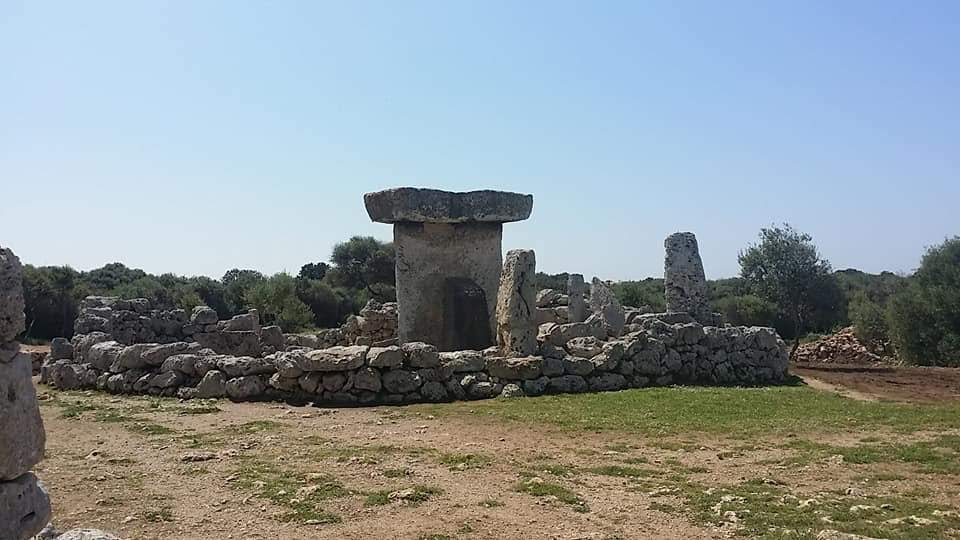
Notable examples include:
- Torre d’en Galmés
- Talatí de Dalt
- Cornia Nou
Taulas: temples unique in the world
Taulas are T-shaped stone monuments found exclusively in Menorca. They are believed to have had a ritual or religious purpose, possibly linked to astronomy and healing practices.
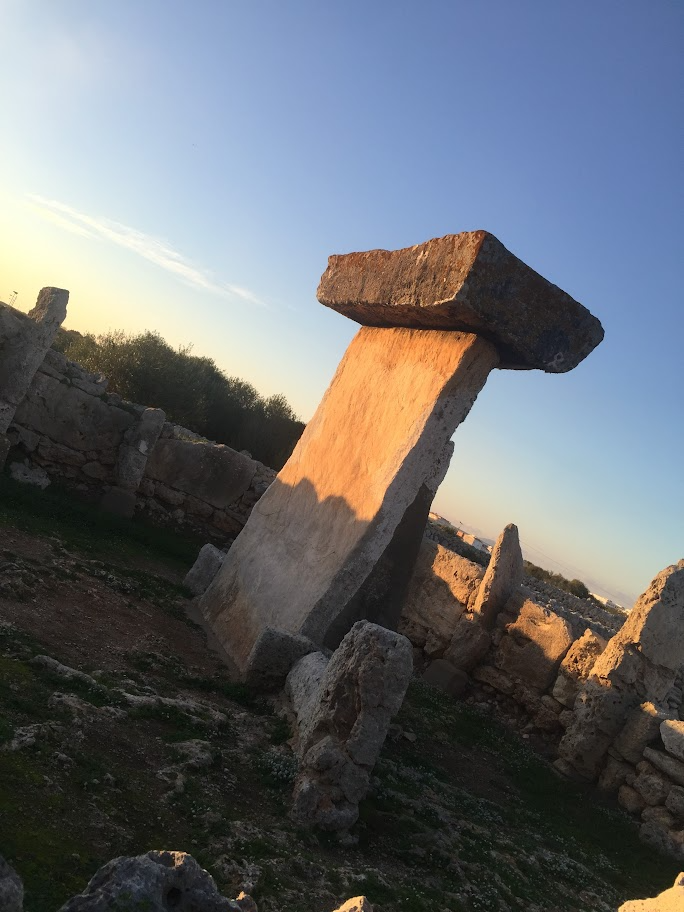
Some of the most representative taulas include:
- Torralba d’en Salort
- Talatí de Dalt
The monumental scale and precision of these structures remain a mystery to archaeologists.
Navetas: prehistoric funerary architecture
Navetas are collective burial structures shaped like an inverted boat. The most famous one is considered the oldest roofed prehistoric building in Europe.
- Naveta d’Es Tudons
Human remains and funerary objects found inside provide valuable insight into the burial rituals of the time.
Main Talayotic settlements in Menorca

Torre d’en Galmés
One of the largest prehistoric settlements in the Balearic Islands, featuring houses, talayots and a well-preserved taula. From here, large parts of the southern coast can be observed.
Talatí de Dalt
Known for its slightly leaning taula and its proximity to Maó, making it an easily accessible archaeological site.
Cornia Nou
A key site for understanding the evolution of Talayotic architecture and the transition to later historical periods.
Talayotic Menorca and World Heritage
The importance of this archaeological complex led to Talayotic Menorca being recognized as a UNESCO World Heritage Site. This designation protects the sites and highlights the uniqueness of a culture that developed in relative isolation for centuries.
This recognition reinforces Menorca’s value not only as a beach destination, but also as an island of remarkable historical and cultural richness.
How to visit Talayotic sites
- Many sites offer free access
- Some have visiting hours and interpretation centers
- Early morning or late afternoon visits are recommended
- Comfortable footwear and water are essential
Some sites are located far from urban areas, so planning transport in advance is advisable.
Recommended Talayotic route
Half-day route:
- Naveta d’Es Tudons
- Torre d’en Galmés
Full-day route:
- Naveta d’Es Tudons
- Talatí de Dalt
- Cornia Nou
- Torralba d’en Salort
Tips for a responsible visit
- Do not climb on the structures
- Do not move stones or remains
- Respect signage and access areas
- Maintain silence and care for the surroundings
These sites have survived for thousands of years thanks to respect for their environment.
Conclusion
Talayotic Menorca is an essential part of the island’s identity. Visiting its archaeological sites reveals that Menorca is much more than coves and beaches—it is living history, ancestral architecture and a cultural legacy unique in the world.
Including these visits in your trip adds a deeper and more enriching dimension, ideal for travelers who want to truly understand the island.